
 Customer



The Duramax LLY is one of the most famous 6.6L diesel engines from GM. It was built in the mid 2000’s and it had a reputation for good towing, decent torque, and a fairly simple diesel design. But age and some well-known weaknesses mean buyers and owners should be aware of its potential problems.
Some common LLY Duramax problems are overheating under heavy loads, turbo issues, injector harness issues, glow plug issues, and cooling system issues. The good news is that many problems can be detected early through proper inspection and maintenance.
It’s also important to know the differences between the LLY and the later LBZ, especially if you are looking to buy a used Duramax truck.

The LLY is a 6.6-liter turbocharged diesel engine introduced in the 2004 model year. It is most commonly found on the 2004.5-2005 model years, though some 2006 trucks were equipped with LLY engines as the transition to the LBZ was underway.
The engine features a variable-geometry turbocharger (VGT), electronic fuel injection, exhaust gas recirculation, and a cooling system designed to support demanding towing applications.

Depending on model year and transmission configuration, the LLY produced approximately 310 horsepower and 605 lb-ft of torque in its common automatic-transmission configuration. Its combination of low-end torque and turbocharged power made it well suited to heavy-duty Chevrolet Silverado and GMC Sierra applications.
The LLY can still provide impressive service today, but most examples are now many years old. Condition, maintenance history, and previous repairs can therefore matter more than the engine badge alone.

When owners talk about LLY problems, several problems pop up again and again. Knowing the symptoms can help diagnose a problem before it becomes an expensive repair:
Overheating During Heavy Loads: One of the most talked-about issues of the LLY Duramax is overheating, especially in situations like towing or going up steep hills. During hard work, the cooling system of the LLY has to dissipate large amounts of heat.
Restrictive Turbo Inlet: The factory turbo inlet design can cause an airflow restriction to the turbocharger. This deficiency can be more noticeable when the engine is under strain. A clogged inlet means less air flowing through and more work for the turbo.
Variable-Geometry Turbo Problems: The LLY’s VGT turbocharger has adjustable vanes to control exhaust flow and boost. Over time, carbon build-up, mechanical wear, sensor faults, and other related problems can affect the way the turbo operates.
Injector Harness Problems: Injector wiring can have problems with connections. Since the injectors need the electrical signals, issues with the wiring can lead to the engine running roughly or having misfires.
Glow Plug and Control-System Issues: Glow plugs help the diesel engine start properly when it is cold. Old glow plugs or issues with the system that controls the plugs can make it harder to start the engine when it is cold.
Water Pump and Cooling-System Failures: Aging of Cooling-System components can lead to coolant leaks that reduce circulation. When the Water Pump fails, engine temperatures can rise, especially on hard drives.
What to check: Coolant leaks should never be ignored, because running the engine without cooling can create far more serious engine problems.
Head-Gasket Concerns: Head-Gasket failure is not always an LLY problem, but repeated overheating can raise the risk of serious engine damage. That is why temperature management matters a lot on an LLY.
What to check: An overheating problem should be diagnosed as being ignored or driven through again.
The 2004 Duramax can be confusing because GM used both the LB7 and the LLY in that model year. The LLY was introduced during the 2004 model year, which’s why many fans call some trucks 2004.5 models.
If you are researching a 04 LLY Duramax, do not rely on the truck’s registration year. Verify the engine by checking the vehicle identification information and the proper engine identification details because replacement parts do not fit an incorrect engine identification. Therefore, when you look into 2004 Duramax issues, first find out whether the truck has an LB7 or an LLY engine.
The 2005 model year is closely linked to the LLY, so the 2005 model year is a pick for buyers who want an older Duramax. The main concerns are cooling system performance, overheating under load, turbocharger-related problems, electrical problems, and normal age-related wear.
A well-maintained 2005 truck can still be a capable workhorse. However, buyers should focus on service history rather than assuming that every 2005 truck with the same engine will have identical reliability.

The 2006 LLY Duramax is in a transition period because GM switched from the LLY to the LBZ.
Therefore, finding the exact engine is very important when you buy replacement parts or look up specifications.
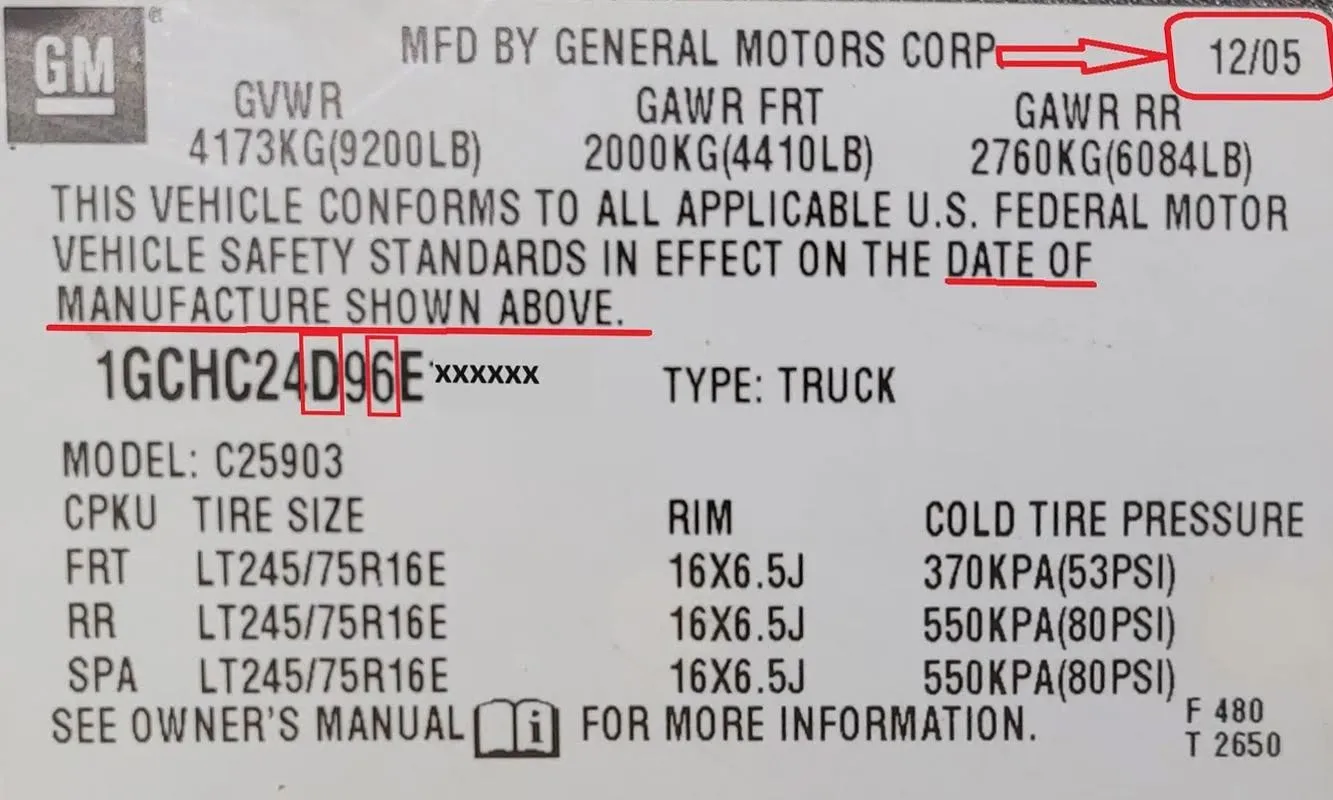
Two trucks from the same model year can cause confusion when owners look for replacement parts. Before you order parts, check the engine configuration, VIN details, and application needs.
| Feature | LLY Duramax | LBZ Duramax |
|---|---|---|
| Engine | 6.6L V8 diesel | 6.6L V8 diesel |
| Typical output | Around 310 hp / 605 lb-ft | Around 360 hp / 650 lb-ft |
| Turbo | Variable-geometry | Variable-geometry |
| Era | 2004.5–2006 transition period | 2006–2007 |
| Reputation | Strong but has cooling concerns | Highly praised |
| Key advantage | Lower purchase cost on many used trucks | More power and strong reputation |
The LBZ has a factory‑output advantage. It has 360 horsepower and 650 lb‑ft of torque, giving the LBZ stronger performance than the earlier LLY. However, performance numbers should not be the buying factor. A maintained LLY, with a strong service history, can be a better purchase than a neglected LBZ that has significant mechanical problems.
The LBZ is often seen as one of the older Duramax engines, but it can have issues. Cooling problems that come with age, issues with the fuel system, wear on the turbocharger, electrical problems, and general parts getting worse over time can impact an LBZ.
If the highest factory performance is what matters most, the LBZ has an edge. If the cost to buy and the overall condition are more important, a checked LLY can still be a good choice.
An LLY can still be used as a diesel engine if the truck has been properly maintained.
Before buying, you should take care of the following concerns:
A clean, well-maintained LLY can provide strong towing ability without needing the premium price that some LBZ trucks demand. The key is that buying should be based on the condition of the truck, not on the reputation of the engine.
Duramax repairs can involve Duramax components that are subjected to heat, vibration, pressure, and mechanical forces. The correct fastener should match the application rather than simply fitting the hole. When selecting a replacement fastener, ensure that you check the thread diameter, pitch, length, material, strength grade, and the application requirements.
Using an incorrect fastener can cause fitment and reliability issues, especially with demanding diesel applications. Tracktech Fasteners can help you with fastener solutions for every Duramax repair and diesel application.
The LLY Duramax is still a trusted diesel engine, but there are some problems that people who own it should be aware of. There are issues with the turbocharger, the wiring for the injectors, the glow plugs, and the cooling system.
The LLY versus LBZ comparison is not as simple as picking the more powerful engine. The LBZ has power from the factory and has a very good reputation. If the LLY is taken care of properly, it can still work very well.
If you are looking into problems with a 2004 Duramax, a 2005 Duramax, or a 2006 LLY Duramax, make sure you know exactly which engine is in the truck and check the truck carefully. If you take care of a Duramax with the right maintenance, right parts, and properly specified fasteners, it can still be a strong and useful vehicle.