
 Customer



The Cummins 5.9L inline-six diesel engine is a very well-known, extremely popular engine in the automotive world for its durability. This internal combustion engine produces a large amount of torque. The Cummins 5.9L has been around for many years and has been used in many applications, from heavy-duty Ram to agricultural machinery and custom swap projects.
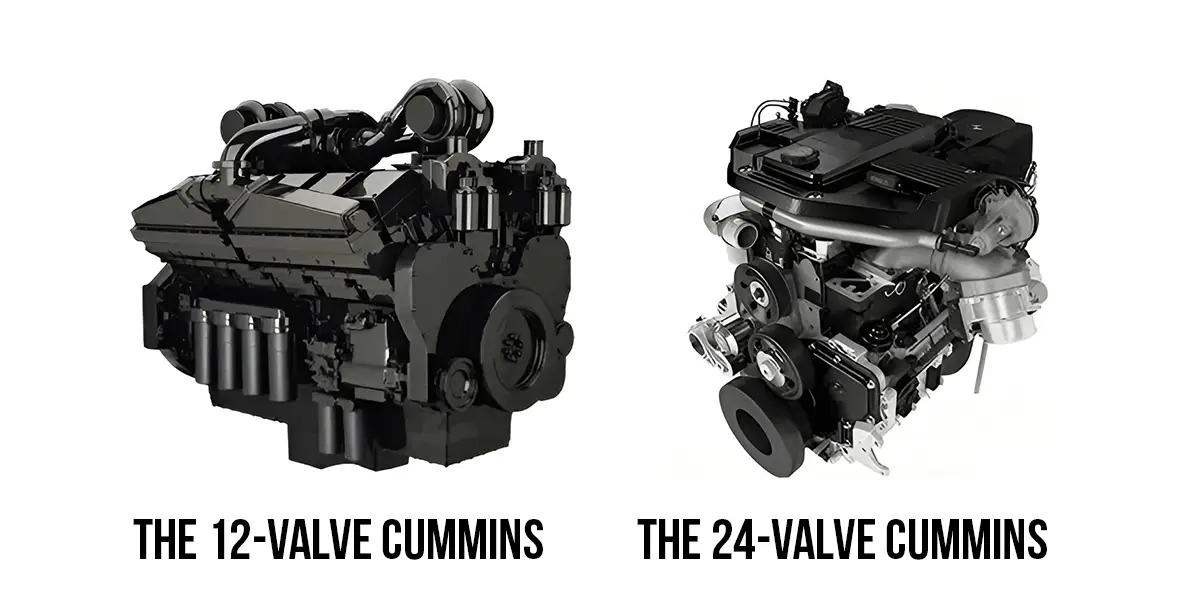
If you’re searching for a vintage diesel truck or are thinking about swapping out the engine, you will eventually find yourself wondering whether to use a 12-valve (12V) or 24-valve (24V) Cummins engine. Although both 12V and 24V engines share very similar blocks, they utilize vastly different fuel systems, cylinder heads, and electronic control systems.
This comparison guide outlines the differences in performance, reliability, modding potential, and common failures between 12V and 24V engines to help you make the best decision for your project.
It is helpful to know the background of both platforms and the progression in their design before examining the details of each.
| Feature | 12 Valve Cummins | 24 Valve Cummins |
|---|---|---|
| Production Years | 1989-1998 | 1998.5- 2002 |
| Valves Per Cylinder | 2 | 4 |
| Injection Pump | VE or P7100( Mech) | VP44( Electronic) |
| Brains/ Electronics | None(Fully Mech) | ECM Controlled |
| Stock Horsepower | 160-215 hp | 215-245 hp |
| Stock Torque | 400-440lb-ft | 420-505 lb-ft |

The 12-volt Cummins engine is well known in the diesel community. It is often referred to as the “holy grail” of diesel truck engines. As it has only two valves per cylinder and nearly all its operating functions are mechanical, it will continue to run if you provide it with air and fuel. No attachment with an electrical system or any type of computer (vehicle computer) is necessary for operation.
Models from 1994- 1998 all have the Bosch P7100 inline injection pump, also known as the “P-pump”. The P-pump is an incredible design that provides high volumes of fuel and withstands extremely high internal pressures. It is considered to be incredibly durable and easy to adjust.
There’s no ECM (Engine Control Module) in the 12V engine, so the combustion process is not being controlled by anything electronically. There are no complicated wiring harnesses to corrode, no sensors that can fail, and no software bugs to leave you stranded on the side of the road.
You do not have to pay for expensive software tuning programs to tune a P-pumped 12v. You can simply tune your diesel with basic hand tools by taking out your stock fuel plate, adjusting your star wheel, or putting in a 3000/4000 RPM governor spring kit. You can gain a lot of horsepower and torque in your driveway.
The 12-valve engine has amazing amounts of low-end torque from the moment you start driving. The design of the combustion chamber, combined with fixed timing of the fuel injections, allows for outstanding fuel economy in most cases. It often exceeds 20 miles per gallon on the highway with the correct gearing.
Although the 12v has great reliability, there is one main mechanical defect. A small steel dowel pin misaligned in the timing gear case at the factory could loosen and fall into the spinning timing gears due to engine vibration.
If the dowel pin falls into the rotating timing gears, it could either crack the housing or destroy your entire engine. Fortunately, there are inexpensive aftermarket kits for permanently fixing this issue, called KDP tab kits.

The new 24v Cummins engines were added during the middle of the 1998 model year in order to comply with new 1998 Federal EPA emission standards. With the addition of two valves, they were also going to use electronic fuel management, which improved airflow, reduced emissions, and also meant a smoother power band.
Since the head has 24 valves, it can flow much more air than the 12v head. Additionally, the injector is situated directly above the piston bowl; this leads to a better, more complete burn, quicker turbo spool-up, and increased horsepower at higher RPMs.
By connecting digital programmers, monitors, and chips to the data port of a 24-v with electronic controls, you can change your engine’s tune and fuel maps quickly and easily. You can plug an electronic throttle controller into the data port, tap into the pump wire, and then alter fuel maps instantly, select between different power levels, and monitor engine vitals.
One major flaw of the 24-v generation is the Bosch VP44 electronic gear-operated injection pump. The all-in-one VP44 uses only diesel fuel for its cooling and lubrication needs. If the factory fuel lift pump fails or there is a drop in fuel pressure below 10 PSIG, then the VP44 will run hot and fail. In that case, you will have an expensive replacement.
24-v engines manufactured between 1999 and 2001 had a block manufactured from cast iron and stamped with “53”. The blocks have thinner water jacket walls, which may crack if the engine is subjected to heavy towing loads or thermal stresses, or the water jacket area may leak coolant from the engine.
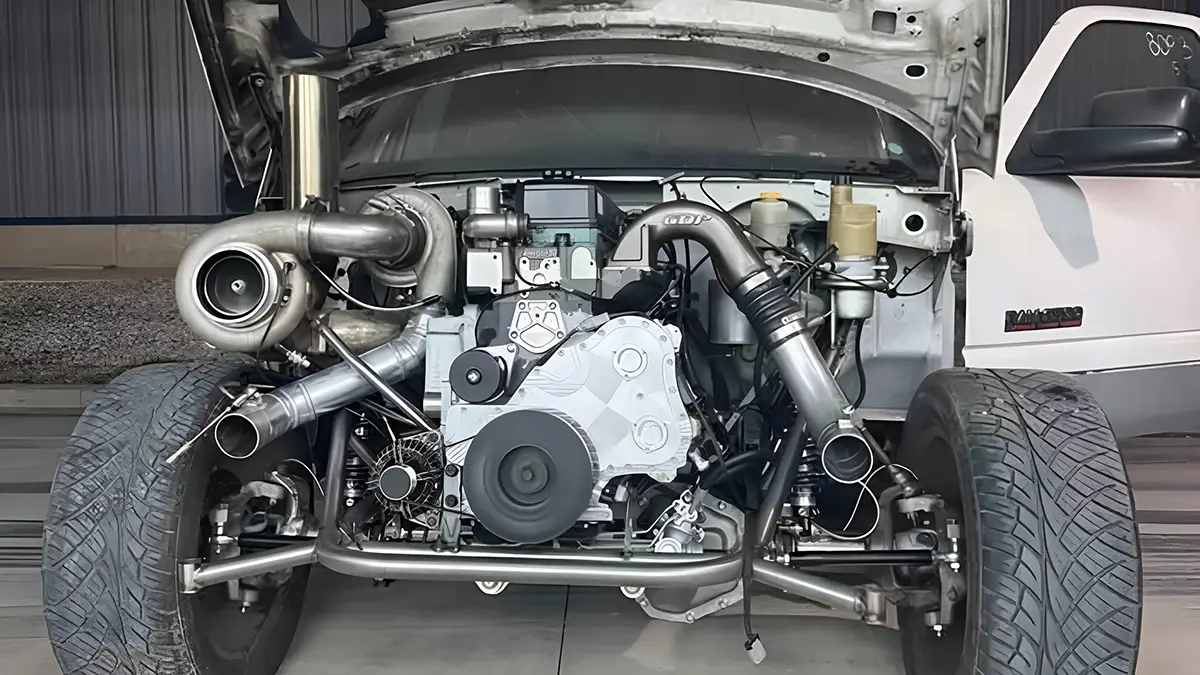
For high-performance diesel truck builds, each platform presents multiple options for upgrades.
The 24-v Cummins has a good chance of being competitive at this power level. With a solid electronic tuner, higher-flowing fuel injectors, a drop-in turbo, and a dependable aftermarket lift pump, you can achieve 450+ horsepower with no tools and no wrench turns required under the hood.
The 12-v Cummins with a P7100 injection pump builds high-horsepower trucks. A VP44 injection pump will produce peak power at approximately 500-600hp, but with a P7100 injection pump, you can modify it to support 800, 1,000, and even 1,500+hp builds with multiple turbos.
With its superior airflow to 3,000 RPM when optimally tuned, the 24v can make much more power on its top end than the 12v engine. The 12v engine in a stock state defuels early in the RPM range (around 2500 RPM) and requires governor spring updates to provide more range.
Both engines regularly surpass 350,000 to 500,000 miles when properly maintained, but they require different approaches to keep them running smoothly.
| Maintenance Metric | 12-Valve | 24-Valve Cummins |
|---|---|---|
| Fuel System Upgrade | Stock lift pump is highly reliable; requires minimal modifications | Requires an immediate aftermarket lift pump (e.g., FASS or AirDog) to protect the VP44 |
| Valve Adjustments | Required every 24,000 miles; simple adjusters with 12 valves | Required every 100,000 miles; requires a bit more time due to 24 valves and bridge adjusters. |
| Electrical Failures | Very rare. No critical engine sensors or control computers to fail. | Sensor failures( Crank/ Cam position, MAP, APPS )can trigger limp mode. |
| Fixed to Prioritise | Killer Dowel Pin (KDP) lock kit must be installed | Monitor fuel pressure constantly using a dedicated gauge. |
The choice between a 12v and 24v Cummins depends on your budget, mechanical experience, and performance goals.
Both 5.9L Cummins engines are great options in the diesel vehicle market. Whichever of these vehicles you decide to buy, you should address the factory defects to have dependability for the life of the vehicle.